

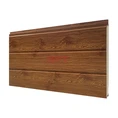
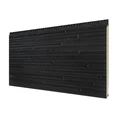
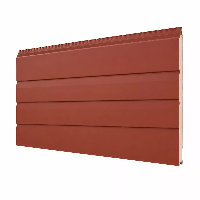
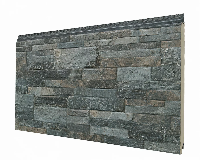
Now many of our building’s exterior walls use decorative steel siding for exterior walls for aesthetics and use. First of all, decorative steel siding has many working performance benefits. In addition, the construction of enterprises is fast, reducing unnecessary troubles and construction waste. Let me tell you how to improve the construction of decorative steel siding.

Because the decorative steel siding can be used for a long time and has a very beautiful style, and the sound insulation effect is also good, it is very popular in China's construction engineering and building materials industry. When we bought it, many student users responded that they did not know how to use it. Method, the following editor will introduce and analyze its precautions:
1. Handling carved boards: The different directions of the length of the boards should be used as the main stress side, and the boards should be handled carefully to avoid collisions and damage to the boards.
2. Transportation method: the bottom surface should be flat, and after loading horizontally, the engraving board should be fixed well to avoid damage to the product due to excessive binding.
3. During transportation: reduce social vibrations and prevent collisions and rain. The environment for placement should be ventilated and dry. The site design needs to be flat and solid.
4. When loading and unloading carved boards: when handling single boards, the board building should be carried upright to prevent the enterprise from affecting the deformation of the board structure.
5. When opening the package of China's decorative steel siding: it should be placed flat first, and then unsealed from the top of the company's product packaging design, and the board can be taken out from top to bottom.
6. During construction: Pay attention to the environmental protection of the traditional carved board surface, avoid scratches and impacts, and avoid construction companies operating when it is raining.
7. During the construction process: ① Prevent the interior of the carved board from contacting water, to prevent the internal water from seeping out from the surface, causing corrosion and rust on the surface of the board, and shortening its service life. Avoid the discharge of high temperature, high humidity, and acidic substances, such as boiler rooms, combustion chambers, hot springs, paper mills, etc.
8. When placed in the open air: the carved board should be completely covered with waterproof cloth.
9. When storing carved panels: keep them away from high temperature and high humidity areas, and do not store them with corrosive substances such as oils and chemicals.
10. On the wall structure surface, there are support system components for air conditioners, air outlets, and other facilities. The welding and other processes should be carried out before the wall panels and thermal insulation engineering materials can be laid.
11. Do not unpack from the side to avoid scratches on the board surface.
12. When using horizontal square wooden support pads, it should be ensured that the flower board will not be affected by deformation.
Surface paint: The outer layer of the surface of the single-sided iron carved board is made of high weather-resistant paint, and the two-color carved board is coated with a layer of fluorocarbon paint, which is safe and environmentally friendly, has no odor and does not fade for a long time.
Surface material: The outer layer is a metal layer, which is pressed by galvanized steel plate (containing 55% aluminum and 43% zinc), and it will not rust all year round.
Core material: rigid high-density polyurethane foam insulation layer treated with flame retardant, which integrates heat preservation, fire prevention, moisture resistance, and high hardness, which is incomparable to ordinary polyurethane foam.
Bottom material: The back is made of an aluminum foil protective layer with good water-proof performance, which can effectively block water vapor from intruding into the board and building walls, and reflect the heat source of the house to enhance the thermal insulation effect.