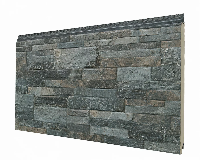


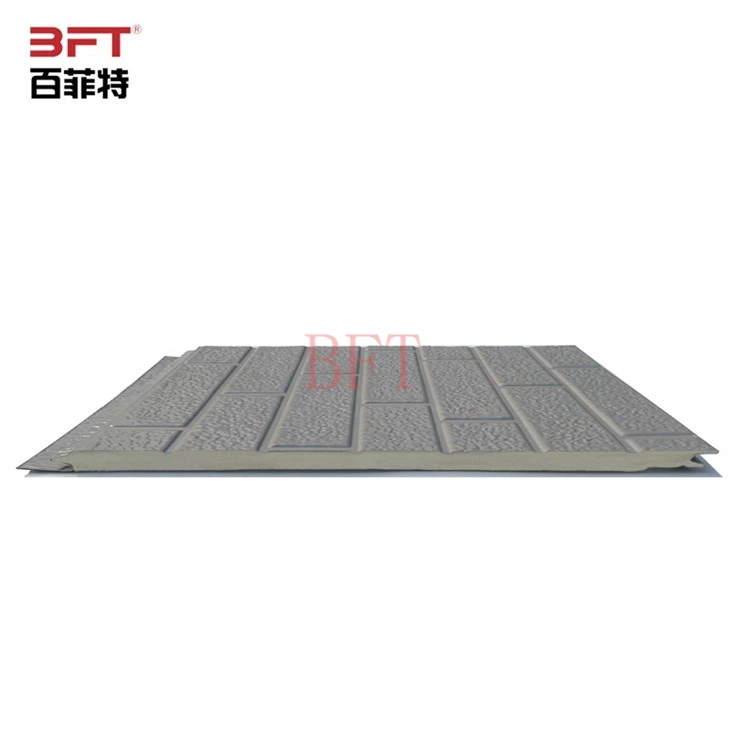

Internal product code: QZ-704
Product Specification
|
Product Name |
foam board wall panels for OEM |
|
Composition |
Surface: Al-Zn alloy-coated steel sheet and high-quantity Nippon paint |
|
Design Style |
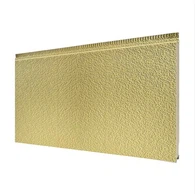
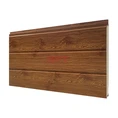
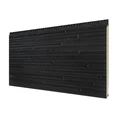
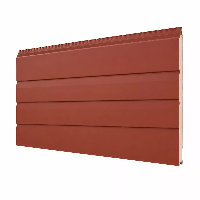
Solid color, brick grain, stone grain, wood grain, Marbling or customized |
|
Thickness |
16mm/20mm or as customers requested |
|
Width |
383mm or as customers requested |
|
Length |
5800mm or as customers requested |
|
Weight |
3.45-3.7kg/㎡ |
|
Fire-proof level |
B1 level |
|
OEM |
Logo, pattern, and panel size |
|
Advantages |
Fire resistant, Waterproof, Thermal Insulation, Soundproof, Earthquake proof, Eco-friendly, Flame-Retardant, Easy Installation. |
|
Application |
Hotel, Villa, Apartment, Building, Hospital, School, Mall, External, Internal, Ceiling, Roofing, Prefabricated House, Container House, Module House. |
Product Structure
Foam board wall panels are a new type of building decoration and thermal insulation environmental protection material developed in recent years. The material is composed of aluminized zinc steel plate, metal fluorocarbon paint, high-density polyurethane, and aluminum foil cloth.


Foam board wall panels are a new building material for exterior walls.
Foam board wall panels are mainly divided into three layers.
The outer layer is a color-coated steel strip, with hot-dip galvanized steel as the substrate.
Steel exposed to the environment will be subject to more corrosion. If it is not protected or isolated from corrosion conditions, the steel will be quickly corroded, and eventually lose its structural strength and cause accidents. The color-coated steel strip using hot-dip galvanized steel strip as the base material is not only protected by the zinc layer, but the organic coating on the zinc layer plays a covering and protective role to prevent the steel strip from rusting, and its service life is longer than that of the galvanized strip, about 1.5 times. The hot-dip aluminum-zinc substrate is plated with 55% AL-Zn, which has excellent anti-corrosion performance, and its service life is more than four times that of ordinary galvanized steel sheets. It is the replacement product for galvanized sheets. Hot-dip galvanized substrate has the following advantages:
(1) It has good durability, and its anti-corrosion ability has a longer service life than galvanized steel sheets;
(2) It has good heat resistance and is less likely to change color at high temperatures than galvanized steel sheets;
(3) Has good heat reflectivity;
(4) It has processing performance and spraying performance similar to that of galvanized steel sheet;
(5) It has good welding performance.
The wall panel is made of a colored paint layer steel belt, using durable polymer (HDP), which has excellent color retention and anti-ultraviolet light performance, excellent outdoor scale inhibitor, good adhesion of the weather-resistant and durable film, and rich colors. It can be sure that the shelf life will not fade for 15-20 years.
The colored steel coil is also called "five-color and six-color steel coil" by many people in the industry because its colors are also very rich and varied.
The core of foam board wall panels is rigid polyurethane foam.
It is characterized by:
1. Rigid polyurethane has moisture-proof and waterproof properties. The closed cell rate of rigid polyurethane is above 90%, a hydrophobic material that will not increase the thermal conductivity due to moisture absorption, and the wall will not seep water.
2. Rigid polyurethane is fireproof, flame retardant, and high-temperature resistant. After adding a flame retardant, polyurethane is a kind of flame retardant self-extinguishing material. Its softening point can reach more than 250 degrees Celsius, and it will decompose only at higher temperatures: in addition, polyurethane will burn in its foam when it burns. A carbon deposit forms on the surface, which helps insulate the foam below. Can effectively prevent the spread of flames. Moreover, polyurethane does not produce harmful gases at high temperatures.
3. Due to the excellent heat insulation performance of polyurethane boards, the thickness of the building's outer protective structure can be reduced under the same heat preservation requirements, thereby increasing the indoor usable area. The thermal insulation effect of 10mm thick rigid polyurethane foam is consistent with that of 16mm polystyrene foam, 18mm rock wool, 15.2cm concrete, and 34.4cm brick wall.
4. Strong anti-deformation ability, not easy to crack, stable and safe finish.
5. The porosity structure of the polyurethane material is stable, basically a closed-cell structure, which not only has excellent thermal insulation performance but also has good freeze-thaw resistance and sound absorption. The average lifespan of the rigid polyurethane foam insulation structure can reach more than 30 years under normal use and maintenance conditions. It can be achieved that under normal use conditions during the life of the structure, it will not be damaged under dry, wet, or galvanic corrosion, as well as due to external factors such as insects, fungi, or algae growth or damage by rodents.
6. Rigid polyurethane has low thermal conductivity and good thermal performance.
7. The overall cost performance is low. Although the unit price of rigid polyurethane foam is higher than that of other traditional insulation materials, the increased cost will be offset by the substantial reduction in heating and cooling costs.
The rigid polyurethane foam used in BFT wallboard has a density of 40kg/m3 and a thermal conductivity of only 0.018~0.024w/(m.k), which is about half of that of EPS and has the lowest thermal conductivity among all insulation materials.
Rigid polyurethane foam fire rating standard:
1>B1 level, the oxygen index is greater than or equal to 30, the fire protection factor is the highest, usually used in some hospitals;
2>B2 level, the oxygen coefficient is greater than or equal to 28, and the combustion coefficient is as long as several hours. Some private owners will choose B2 fireproof materials;
3>B3 grade, the oxygen index can reach 26, which is a general fireproof material with high-cost performance and a large number of users.
The rigid polyurethane foam used in BFT wall panels generally reaches B2 grade; users can customize products that reach B1 fire protection grade.
The back of the foam board wall panels uses glass fiber aluminum foil cloth, which is essentially different from ordinary aluminum foil.
Common aluminum foil paper refers to paper made of thin aluminum foil backing paper and aluminum foil paper. Aluminum foil does not rebound after deformation. Easy to characterize, ensure shading, no falling, no light transmission, no pollution, and cheap price.
The common glass fiber aluminum foil cloth is composed of aluminum foil, glass fiber fireproof cloth, and hot melt. The surface of glass fiber aluminum foil cloth is smooth and flat, with high light reflectivity, high vertical and horizontal tensile strength, airtight, watertight, and good sealing performance. It has a high shielding rate, strong material toughness, and low price.
Glass fiber aluminum foil cloth is mainly used indoors as thermal insulation material for heating and cooling equipment pipes, sound-absorbing and sound-insulating materials for buildings, the outer sheath of rock wool and ultra-fine glass wool, and plays the role of flame retardant, heat insulation, and sound absorption.
Aluminum foil paper will be corroded in humid air and form a metal oxide film, while aluminum foil cloth has better corrosion resistance. Aluminum foil cloth has stronger abrasion and tear resistance, it is relatively more durable and heavy-duty than aluminum foil paper. Aluminum foil cloth is generally thicker, so it is more suitable for covering large areas, and it can prevent the penetration of water, dirt, and odor very well. In addition, because it is relatively thick, it can insulate heat well and is suitable for cold storage and preservation of food.

Foam board wall panels with tongue and groove structure:
Foam board wall panels are lightweight, durable, and easy to install building materials commonly used for wall insulation and decoration. The tongue and groove structure is a common installation method for foam board wall panels, allowing multiple panels to be joined together to form a flat wall surface.
The tongue and groove structure consists of two parts: the tongue and the groove. The tongue is a protrusion with a sawtooth shape on the edge of the wall panel. The groove is a corresponding recessed area on the edge of another wall panel. This design allows the panels with tongue and groove to interlock and create a tight joint.
When installing foam board wall panels with tongue and groove structure, the tongue of one panel is inserted into the groove of another panel. Then, by gently pressing the panels together, the tongue and groove securely connect. This connection method ensures that there are no visible gaps between the panels and enhances the stability of the entire wall surface.
The advantages of the tongue and groove structure for foam board wall panels include:
Quick installation: The tongue and groove structure simplifies the installation process, reducing construction time.
Sturdy and stable: The tongue and groove structure provides strong connections, allowing the panels to fit tightly and increasing the stability and durability of the wall surface.
Aesthetic appeal: With the tongue and groove structure, there are no visible gaps between the panels, resulting in a smooth and visually pleasing wall surface.
It is important to note that although the tongue and groove structure provides a strong connection, proper alignment and insertion should still be ensured during installation to achieve tight and secure joints between the panels. Additionally, when selecting foam board wall panels and the tongue and groove structure, factors such as suitability, durability, and insulation performance should be considered to meet specific construction requirements.
Texture And Colors

Texture and Color Options for Foam Board Wall Panels:
Foam board wall panels offer a range of texture and color options to cater to different design needs and interior styles. Here are some common choices for texture and color:
Texture:
Smooth: Smooth foam board panels have a sleek and polished surface, providing a clean and modern appearance.
Patterned: Patterned panels feature intricate designs or textures, adding depth and visual interest to the wall surface.
Wood grain: Foam board panels with a wood grain texture mimic the natural look of wood, offering a rustic or traditional aesthetic.
Stone texture: Panels with a stone-like texture can replicate the appearance of various types of stone, such as brick, slate, or marble, adding an element of elegance or ruggedness to the walls.
Our exterior wall panels showcase a captivating 3D wall effect created by the intricate patterns and varying depths. The carefully designed patterns on the panels generate an impressive three-dimensional visual impact. The interplay of light and shadow within the patterns adds depth and dimension to the entire wall surface. This unique feature not only adds artistic flair to the building but also creates a mesmerizing visual experience for any space. Whether indoors or outdoors, our exterior wall panels deliver a sophisticated and striking 3D wall effect that will leave a lasting impression.
Color:
White: White foam board panels are a popular choice for their versatility and ability to create a bright and airy atmosphere.
Neutral tones: Beige, gray, or taupe shades are commonly used to achieve a sophisticated and timeless look.
Bold colors: Vibrant and bold colors like red, blue, or yellow can be selected to make a statement or add a pop of color to the space.
Custom colors: Some manufacturers offer the option to customize the color of foam board panels, allowing for personalized design choices to match specific color schemes.
When selecting the texture and color of foam board wall panels, it is important to consider the overall design concept, the desired atmosphere, and how the panels will complement other elements in the room, such as furniture, flooring, and lighting.
Product Accessories


When it comes to the installation of sandwich panels, a range of accessories are available to enhance the process and performance. These accessories include starters, closures, joints, corner trims, and door/window kits. Each of these components serves a specific purpose and offers unique advantages in relation to sandwich panels.
Starters:
Starters are essential components used to initiate the installation of sandwich panels. They provide a secure foundation and level surface for the panels, ensuring a proper start to the installation process.
Advantages:
Ensures a stable base for the sandwich panel installation.
Facilitates accurate alignment of the panels.
Enhances overall installation stability.
Closures:
Closures are designed to seal the edges of sandwich panels during installation. They are placed between the panel edges and the adjacent structures, such as walls or roofs, to create a tight and secure seal.
Advantages:
Prevents the infiltration of moisture, wind, and debris into the building.
Enhances thermal and acoustic insulation properties.
Improves overall weatherproofing and energy efficiency.
Joints:
Joints are used to connect adjacent sandwich panels during installation. They are installed at the vertical seams between panels, providing structural integrity and continuity.
Advantages:
Enhances overall strength and stability of the sandwich panel system.
Minimizes air infiltration and heat loss at panel joints.
Improves load-bearing capacity and resistance to external forces.
Corner Trims:
Corner trims are utilized to protect and finish the external corners of sandwich panels. They are installed at the outer edges of the panels to offer durability, impact resistance, and a visually appealing appearance.
Advantages:
Guards vulnerable corners of sandwich panels against damage.
Enhances structural integrity and longevity of the panels.
Provides a neat and professional finish to the building's exterior.
Door/Window Kits:
Door/window kits are specifically designed for installing and sealing doors or windows within sandwich panels. They ensure a proper fit, weatherproofing, and seamless integration of openings.
Advantages:
Facilitates the installation of doors and windows in sandwich panel structures.
Provides effective sealing against air and water infiltration.
Enhances the overall appearance and functionality of openings.
In summary, the accessories for sandwich panels, including starters, closures, joints, corner trims, and door/window kits, offer significant advantages in terms of stability, sealing, structural integrity, protection, and aesthetic enhancement. They play a crucial role in ensuring the successful installation and performance of sandwich panel systems in buildings.
Foam Board Wall Panels Panelling
The installation method of the foam board wall panels is simple and fast, and it is not restricted by the seasonal climate and geographical environment, and it is suitable all year round. The significantly shortened project cycle not only speeds up the project's progress but also saves construction costs and reduces the overall cost. The metal carved board achieves the effect of decoration and heat preservation while minimizing the load on the external wall and enhancing the usability of space and land.

Foam board wall panels, also known as foam insulation panels, are a popular choice for their excellent thermal insulation properties and ease of installation. To ensure a successful installation and maximize the benefits of these panels, it is important to follow proper procedures and consider key factors specific to the industry.
Installation Process:
Preparation:
Begin by measuring the wall surface and calculating the number of foam board panels required.
Ensure the wall surface is clean, dry, and free from any debris or obstructions.
If necessary, apply a vapor barrier or moisture-resistant coating to the wall surface.
Cutting:
Use a sharp utility knife or a saw to cut the foam board panels to the desired size and shape.
Take precise measurements and mark the cutting lines on the panels before making any cuts.
Ensure that the cuts are straight and accurate for a proper fit against the wall.
Adhesive Application:
Apply a high-quality construction adhesive or foam board adhesive to the back of each panel.
Follow the manufacturer's instructions for the recommended adhesive type and application method.
Apply the adhesive evenly, covering the entire back surface of the panel.
Panel Installation:
Press the foam board panel firmly against the wall, starting from one corner or edge.
Ensure proper alignment and positioning of the panel before securing it in place.
Use gentle pressure to ensure good adhesion between the panel and the wall surface.
Panel Fastening:
Depending on the specific installation requirements and panel size, additional fasteners may be necessary.
Consider using specialized fasteners such as screws or nails designed for foam board panels.
Place the fasteners strategically to secure the panels and prevent any movement or sagging.
Panel Finishing:
Once all the panels are installed, inspect the seams between the panels for any gaps or unevenness.
Fill any gaps or joints with foam board adhesive or an appropriate sealant to ensure a seamless appearance.
Use joint tape or corner trims for enhanced aesthetic appeal and added durability.
Key Considerations:
Safety Precautions:
Wear appropriate personal protective equipment, such as gloves and safety glasses, during the installation process.
Follow safety guidelines and precautions provided by the manufacturer of the foam board panels and adhesive.
Moisture Management:
Ensure proper moisture management by addressing any existing water leaks or moisture issues before installation.
Use vapor barriers or moisture-resistant coatings to prevent moisture infiltration into the walls.
Thermal Bridging:
To minimize thermal bridging, use appropriate insulation materials and techniques around windows, doors, and other openings.
Consider adding insulation to the cavity spaces between the foam board panels for enhanced thermal performance.
Building Codes and Regulations:
Familiarize yourself with local building codes and regulations related to foam board panel installation.
Ensure compliance with fire safety standards and any specific requirements for insulation materials.
By following these installation procedures and considering important factors such as safety, moisture management, thermal bridging, and compliance with regulations, you can achieve a successful and effective installation of foam board wall panels. These panels will provide excellent thermal insulation and contribute to energy efficiency in the building while enhancing overall comfort.
Product Application
Foam board wall panels are the new building material for construction, due to their outstanding performance of waterproof, thermal&heat insulation, it's widely used in residential houses, storerooms packing rooms, plants, factories, carports, office buildings, powerhouses, warehouses, shops, offices, temporary civil houses, and so on.

Foam board wall panels have found significant applications in various sectors, particularly in English-speaking countries. Here are some important application areas:
Residential Construction: Foam board wall panels are commonly used in residential construction, including single-family homes, apartments, and multi-family housing. These panels provide excellent insulation, reducing energy consumption and improving indoor comfort.
Commercial Buildings: Commercial structures such as office buildings, shopping centers, hotels, and healthcare facilities extensively utilize foam board wall panels. They offer effective insulation and soundproofing, contributing to energy savings and operational cost reduction.
Industrial Facilities: Foam board wall panels are widely employed in industrial facilities such as factories, warehouses, and logistics centers. These panels offer superior thermal insulation and structural strength, providing good thermal and protective performance.
Cold Storage and Freezer Facilities: Due to their exceptional insulation properties, foam board wall panels are commonly used in cold storage and freezer facilities. They effectively maintain low-temperature environments, ensuring the freshness and safety of stored products.
Agricultural Buildings: The agricultural industry also extensively uses foam board wall panels in structures such as livestock sheds, greenhouses, and farm buildings. These panels provide good insulation and help create optimal growth environments.
Educational and Healthcare Facilities: Educational institutions, universities, hospitals, and medical facilities often utilize foam board wall panels. These panels offer excellent sound insulation, creating quiet and comfortable learning or treatment environments.
Retail and Hospitality: In the retail and hospitality sectors, foam board wall panels are employed in shops, restaurants, hotels, and entertainment venues. They provide insulation, contribute to a pleasant indoor environment, and enhance energy efficiency.
Sports and Recreation Facilities: Sports complexes, gyms, and recreational facilities also benefit from foam board wall panels. The panels offer thermal insulation, sound absorption, and durability, creating comfortable and efficient spaces.
Renewable Energy Structures: Foam board wall panels are used in structures related to renewable energy, such as solar farms and wind turbine facilities. These panels provide insulation and protection against weather elements.
Exhibition and Event Spaces: Foam board wall panels are utilized in exhibition halls, trade shows, and event spaces. They offer versatility, allowing for easy customization, branding, and temporary partitioning.
These are some of the key application areas of foam board wall panels in English-speaking countries. Their excellent performance, versatility, and energy-saving benefits make them a preferred choice in the construction and engineering industries.
Product Advantage

1. Significant energy-savings thermal conductivity coefficient of 0.024W/(c. K), 16mm thickness, metal board thickness 0.27-0.33mm, recovery reaches 99.9%, service life is more than 45 years.
2. Anti-seismic and Anti-cracking lightweight, good shock resistance, and strong integrity after anchoring make it possible to eliminate earthquake damage to buildings.
3. Flame retardant and fire resistant
4. Waterproof, Damp-proof and Anti-leaking
5. Sound insulation and Noise reduction The Core material Hard PU foam is independent and consists of a closed bubble structure, so it has a good sound effect and provides you with a quiet and comfortable environment even in noisy areas.
6. Easy and quick installation
7. Strong Decorative effects and Eco-friendly.
About Price
Factors affecting the price of Foam Board Wall Panels:
Material Costs: The cost of foam board wall panels is influenced by the materials used. Different types of foam board materials, such as Expanded Polystyrene (EPS), Polyurethane (PU), or Extruded Polystyrene (XPS), have varying costs. The availability and price fluctuations of raw materials also impact the final product's pricing.
Production Processes: The production techniques and level of technology required for foam board wall panels influence the costs and pricing. More advanced production processes and equipment generally lead to higher production costs, which can affect the product's price.
Thickness and Size: The thickness and dimensions of foam board wall panels are factors in determining the price. Thicker panels and custom sizes often require more materials and additional processing, making them more expensive.
Panel Features and Performance: Certain foam board wall panels may have special performance characteristics such as insulation, fire resistance, or waterproofing. These additional features can increase production costs and subsequently impact the product's price.
Market Competition and Brand Influence: Market competition and brand recognition also influence the pricing of foam board wall panels. Well-known brands often command higher prices, while more competitive markets may result in more competitive pricing.
Geographic Location and Transportation Costs: The geographic location of production and transportation costs also affect the price of foam board wall panels. Transport distance, shipping methods, and the supply chain of raw materials can impact the final product's pricing.
Economic Factors: Macroeconomic factors such as inflation rates, exchange rate fluctuations, and labor costs can also influence the pricing of foam board wall panels.
In international trade, the pricing of Foam Board Wall Panels is typically determined by several factors:
Supply and Demand: The dynamics of supply and demand in the international market play a significant role in pricing. If the demand for foam board wall panels is high relative to the supply, prices may increase. Conversely, if the supply exceeds demand, prices may decrease.
Material Costs: The cost of materials used in manufacturing foam board wall panels, such as EPS, PU, or XPS, can impact pricing. Fluctuations in the cost of raw materials affect the overall production cost, which in turn influences pricing decisions.
Transportation and Logistics: The costs associated with transporting foam board wall panels internationally, including shipping, customs duties, and handling charges, are factored into the final price. Distance, shipping method, and logistical complexities can affect pricing.
Manufacturing and Overhead Expenses: Production costs, including labor, machinery, utilities, and overhead expenses, are considered when determining the pricing of foam board wall panels. Factors such as production efficiency, economies of scale, and operational costs influence the final price.
Market Competition: The level of competition among suppliers and manufacturers of foam board wall panels in the international market can impact pricing. Intense competition may lead to more competitive prices, while market dominance or limited competition can result in higher prices.
Currency Exchange Rates: Fluctuations in currency exchange rates can affect the pricing of foam board wall panels in international trade. Exchange rate movements between the exporting and importing countries can impact costs and pricing decisions.
Brand Reputation and Quality: Established brands with a strong reputation for quality may command higher prices in international trade. Buyers often associate value with reputable brands, which can influence pricing.
Negotiation and Contracts: Pricing in international trade is subject to negotiation between buyers and sellers. Contracts and agreements between parties outline the terms and conditions, including pricing structures, discounts, and payment terms.
Package and Transportation
Packing: Carton packaging + Packaging belt
(1) Board cabinet size:
It is generally required to be 5.8m for a 20-foot cabinet, According to the needs of customers, the total length of a 40-foot cabinet is less than 11.8 meters
(2) Loading information:
The size and specification of the 20-foot small cabinet is about 5.898 × 2.352 × 2.385m, and the assembly level is about 1300(excluding spare parts space) 40 large cabinet (high cabinet): 12.032 × 2.352 × 2.69M, about 3300 flat (excluding spare parts space)

FAQ
Q: Where is your factory located?
A: Zibo City, Shangdong Province, PRC.
Q: Are you a trading company or a factory? Can we visit your factory?
A: We have our own trading company and factory. Yes, warmly welcome to our factory.
Q: What's your MOQ?
A: MOQ>500m2
Q: Can we order products of different colors?
A: Sure. We can produce according to the customer's requirements.
Q: Can you provide a sample?
A: Yes. We can supply free samples. But the delivery charges will be covered by our customers.
Q: What about the terms of payment?
A:T/T,L/C,and Western Union.30%T/T advanced payment, the balance at the time of shipment. Other terms of payment also can be negotiated.
Why choose us?
- Our pricing strategy is transparent and competitive, with no hidden costs or surprise fees.
- Our Foam Board Wall Panels are based on the market with exquisite craftsmanship, high quality, preferential prices, good business reputation and sales performance.
- Our PUF Metal Siding Panels are lightweight, durable, and resistant to weather and corrosion.
- In today's era of rapid development of the division of labor in the industry, our company with "quality first, customer first" business philosophy.
- We offer a range of packaging and shipping options to ensure our products arrive safely and securely.
- Internally, we pay attention to teamwork; externally, we take the initiative to seek cooperative customers, enhance competitiveness and achieve a win-win situation.
- We are committed to ethical and sustainable business practices.
- We rely on scientific business management and strong capital operation capabilities to continuously develop in market competition.
- We offer a manufacturer’s warranty on our products to provide additional peace of mind for our clients.
- The company adheres to the tenet of "survive by quality and development by service" and the concept of "integrity, pragmatism, innovation, and progress". We welcome new and old customers to come to technical exchanges and cooperation.
Hot Tags: Foam Board Wall Panels For OEM, China Foam Board Wall Panels For OEM manufacturers, suppliers, factory, sandwich cladding, rusted corrugated metal siding, rustic corrugated metal siding, single skin sandwich panel, modern metal panel siding, metal siding wall panels